

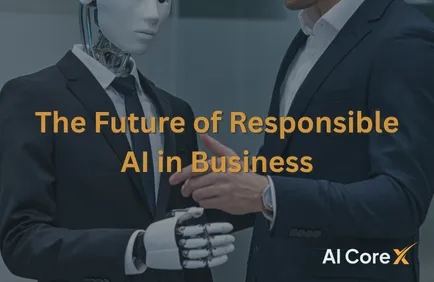
Artificial intelligence is transforming the way organisations operate. From streamlining workflows and improving customer experiences to supporting strategic decision-making, AI has become a powerful tool for driving innovation. As adoption accelerates, however, organisations are recognising that success depends on more than implementing advanced technology. It also depends on using AI responsibly.
Responsible AI is becoming a key business priority because organisations must balance innovation with security, transparency, fairness and accountability. Customers, employees, regulators and business partners increasingly expect organisations to demonstrate that AI systems are trustworthy and aligned with ethical and legal standards.
Businesses that embed responsible AI into their operations today will be better positioned to innovate with confidence while maintaining long-term trust.
AI Is Moving Beyond Experimentation
Only a few years ago, many organisations viewed AI as an emerging technology reserved for experimental projects. Today, it is being integrated into customer service, software development, marketing, cybersecurity, finance and countless other business functions.
As AI becomes part of everyday operations, organisations must manage it with the same discipline applied to financial management, information security and operational governance.
This shift marks the beginning of a new phase where AI is no longer simply a technology initiative but a core business capability.
Trust Will Define Successful AI Adoption
The future of AI is closely linked to trust. Organisations that cannot explain how AI systems make decisions or protect sensitive information risk losing the confidence of customers and stakeholders.
Building trust requires transparency throughout the AI lifecycle. Organisations should understand how models are developed, what data is used and how decisions are reviewed when human judgement is required.
Responsible AI is not about limiting innovation—it is about ensuring innovation delivers positive and sustainable outcomes.
Governance Will Become Standard Practice
As artificial intelligence becomes more deeply integrated into business operations, governance will become an essential part of every AI programme.
Effective governance helps organisations define responsibilities, establish approval processes and monitor AI systems over time. It also ensures that AI initiatives remain aligned with business objectives, legal obligations and organisational values.
International frameworks such as ISO/IEC 42001 provide practical guidance for building AI management systems that support continuous improvement and responsible adoption.
Rather than viewing governance as additional administration, leading organisations see it as an enabler of scalable and sustainable innovation.
Human Oversight Will Remain Essential
Despite rapid advances in artificial intelligence, people will continue to play a critical role in decision-making.
AI excels at analysing large volumes of information and identifying patterns, but human expertise remains essential for interpreting results, applying business context and making ethical decisions.
Organisations that combine AI capabilities with human judgement are more likely to achieve reliable outcomes while maintaining accountability.
The future of work is not about replacing people with AI—it is about creating stronger collaboration between people and intelligent technologies.
Security and Privacy Must Be Built In
Responsible AI depends on strong cybersecurity and effective data governance.
AI systems often process sensitive information, making security an essential consideration throughout development and deployment. Organisations should establish clear policies for data protection, access management, monitoring and incident response to reduce potential risks.
Privacy should also be considered from the earliest stages of AI projects. Designing systems with security and privacy in mind helps organisations maintain compliance while strengthening customer confidence.
Preparing for Evolving Regulations
Governments and regulatory bodies around the world are developing new frameworks to ensure AI is used responsibly.
Organisations that establish governance today will be better prepared to adapt to future regulatory requirements. Maintaining documentation, assessing risks and implementing clear policies creates a strong foundation for compliance without slowing innovation.
Preparing early also reduces the cost and complexity of responding to future legal changes.
Responsible AI Supports Long-Term Business Value
Responsible AI is often associated with risk management, but its benefits extend much further.
Organisations that adopt responsible practices are better positioned to build stronger customer relationships, attract business partners and improve operational consistency. Clear governance also enables faster decision-making because responsibilities and processes are already established.
When employees understand how AI should be used, they can innovate with greater confidence while reducing uncertainty around compliance and security.
Ultimately, responsible AI creates a more sustainable environment for innovation.
Looking Ahead
Artificial intelligence will continue to evolve at a remarkable pace over the coming years. New capabilities will create opportunities that are difficult to imagine today, but the organisations that benefit most will be those that build strong foundations now.
Responsible AI should not be viewed as a destination but as an ongoing commitment to continuous improvement, transparency and accountability. Businesses that embrace this mindset will be better equipped to adapt to technological change while maintaining the trust of customers, employees and stakeholders.
The future belongs to organisations that innovate responsibly, manage risks proactively and recognise that technology and governance must evolve together.
Conclusion
Artificial intelligence is becoming one of the most influential technologies of the modern business era. While its potential is enormous, long-term success depends on implementing AI responsibly.
By combining effective governance, strong cybersecurity, transparent processes and human oversight, organisations can unlock the full value of AI while protecting their people, customers and reputation.
Responsible AI is no longer simply a best practice—it is becoming a business imperative for organisations that want to innovate confidently and sustainably.